

Recent structural collapses point to recurring weaknesses in the built environment sector – Macpherson
Recent structural collapses point to recurring weaknesses in the built environment sector – Macpherson
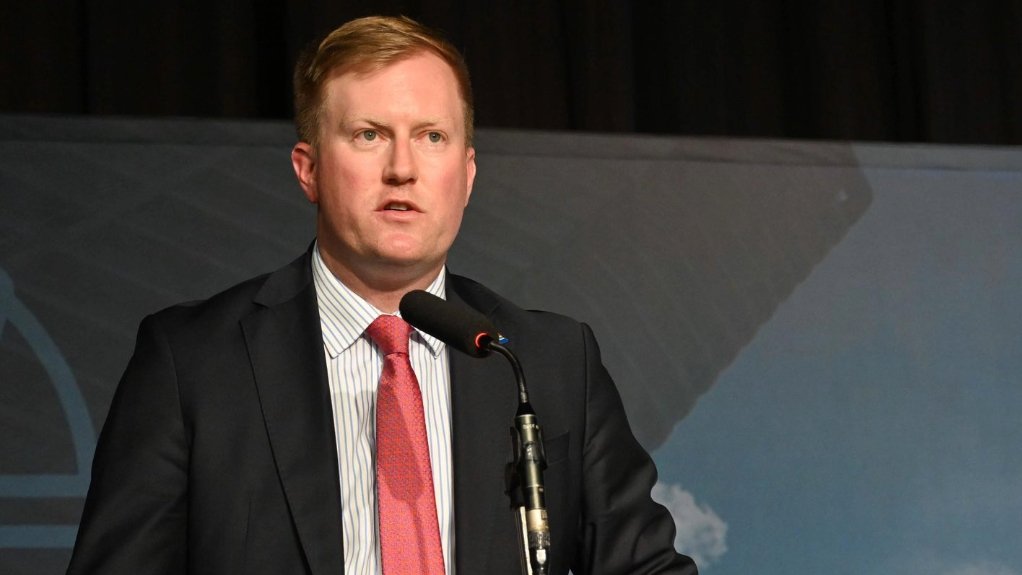
Following a series of recent building and construction site collapses across South Africa, Public Works and Infrastructure Minister Dean Macpherson has announced the findings of four investigations undertaken by the Council for the Built Environment (CBE).
The investigations follow incidents at Redcliffe, in Verulam, in eThekwini, KwaZulu-Natal; Doornkop, in Soweto, Gauteng; Ormonde, in Johannesburg, Gauteng; and the Magnolia Development, in Sea Point, Cape Town, in the Western Cape.
Across the four incidents, which occurred between December 2025 and March of this year, 17 people lost their lives and 24 people were injured.
Unpacking the findings of the CBE’s report on the incidents, Macpherson said that repeated building collapses pointed to deeper structural issues that needed to be urgently reviewed to improve building safety and construction oversight.
“As we work to turn South Africa into a construction site, it is critical that we do so in an environment where building construction can be trusted and the loss of life avoided,” the Minister said during a media briefing on August 20.
The investigations examined the technical circumstances surrounding each incident; whether the appropriate building approvals and construction permits were in place; whether suitably registered and competent built-environment professionals had been appointed; whether construction was being properly supervised and inspected; and whether municipalities, regulators and other responsible authorities were able to identify and intervene where construction was unsafe or unlawful.
Macpherson noted that, while each incident occurred in different circumstances and had different immediate causes, considered together, the incidents identified recurring weaknesses across parts of the built environment system, which required attention.
CASE STUDIES
Macpherson explained that five people died and 11 were injured following the collapse of a building at Redcliffe on December 12.
He noted that the investigation could not conclusively determine a single technical cause because critical information either did not exist or could not be obtained.
He said the findings indicated several possible technical contributors and that the necessary approvals for the building had not been obtained, meaning that the project also did not pass through the ordinary systems of regulatory inspection and oversight.
“The investigators describe Redcliffe as a case of ignoring the law. That is the central lesson from this incident. A building of this scale should never have been capable of progressing so far without the necessary approvals, professional oversight and regulatory visibility,” said Macpherson.
Additionally, the report notes that the collapse of part of a two-storey building in Doornkop on December 28 led to three fatalities and three injuries.
The investigation established that the property was situated on high-risk dolomitic land. Macpherson noted that this danger was already known as a decision had been taken in the late 1990s to relocate residents from the property because of the dolomite risk.
The investigation concludes that the most probable cause of the eventual collapse was a shallow sinkhole or doline beneath the building, which resulted in the loss of foundation support.
The Minister said the investigation also found weaknesses in Johannesburg’s broader management of dolomitic land.
These include concerns about whether the required dedicated dolomite risk management capacity had been established, weaknesses in the systems used to manage known dolomite risks, shortcomings in preventing unlawful occupation of particularly high-risk land and inadequate public awareness and hazard-reporting mechanisms.
The report also points to the presence of other occupied properties within areas previously considered unsafe.
“Doornkop therefore raises a broader concern extending beyond a single house. The lesson is simple. Identifying a danger is not enough. Once government knows that land or a structure poses a serious risk to life, that risk has to be actively managed until it is resolved,” said Macpherson.
At Magnolia, on February 17, about 40 m2 of temporary formwork at Level 3 became unstable and failed, with four people injured.
There were about 140 workers on the site at the time.
The Minister noted that the collapse was owing to a failure of temporary works during construction and the immediate cause was the premature loading of an incomplete and uninspected temporary works structure.
“Magnolia shows that even where the regulatory and professional framework is in place, construction-stage controls have to operate properly every day. Compliance cannot simply exist in documentation. Every safety control has to operate at the point where work is actually being performed,” said Macpherson.
Finally, the fourth investigation concerns the industrial development in Ormonde, south of Johannesburg, where, on March 2, while concrete topping was being placed on suspended floors, part of the structure collapsed onto workers below.
Nine workers died and six were injured.
“The technical findings are extremely serious,” said Macpherson, noting that the investigators concluded that the beams and columns supporting the affected slabs effectively had no capacity to carry the additional live load being applied during this construction operation.
He added that the regulatory findings were equally concerning, explaining that no application for building approval had been submitted to the City of Johannesburg before the collapse.
The investigation also identified serious concerns about the professional engineering arrangements associated with the development.
“The investigators describe the Ormonde collapse as ‘a disaster waiting to happen’. That is a severe conclusion,” said Macpherson.
LESSONS
Looking at the four cases together, Macpherson noted the top findings from the report. These included the need for stronger professional accountability, improved information-sharing, greater visibility of construction activity, better systems for reporting structural incidents, improved verification of professional competence and modernisation of the regulatory framework.
The Minister said one of the important recommendations emerging from these investigations was that government needed to become better at detecting risk before a collapse occurred.
“That has to be our objective,” he said.
Macpherson argued that increasing the pace and scale of construction could not come at the expense of safety.
“In fact, the more we build, the more important effective building control, competent professionals, proper construction management and strong enforcement become.”
MOVING FORWARD
Looking ahead, Macpherson said the recommendations presented in the findings needed to be considered and acted upon by the institutions responsible for them.
The Minister has directed the CBE to formally share the relevant findings and recommendations arising from these investigations with the respective municipalities and other affected stakeholders, and to engage them directly on the findings and proposed interventions.
“It is important, however, that we respect due process. These reports identify technical, regulatory, governance and professional failures.
“They do not determine criminal or civil liability. That responsibility ultimately rests with the appropriate investigative authorities, professional disciplinary processes and the courts. We must therefore avoid prejudging those processes,” he said.
Macpherson explained that the investigations aimed to establish what happened and what this said about the system responsible for protecting the public.
“The answer is not that every construction site in South Africa is unsafe. Nor is the answer that every municipality, regulator or built environment professional has failed.
“The evidence does not support either conclusion.
“The answer is that there are identifiable weaknesses in our system which, in some cases, have allowed dangerous or unlawful construction to proceed, reduced the ability of authorities to intervene, weakened professional accountability and left known risks inadequately managed.”