

South Africa’s export growth masks deeper competitiveness challenges
South Africa’s export growth masks deeper competitiveness challenges
South Africa’s growing trade surplus masks a deeper weakness in its export economy, with rising earnings increasingly concentrated in mining and precious metals while other exports struggle to gain ground.
The country recorded a trade surplus of R169 billion between January and September 2026, up from R117.5bn in the same period last year. Export earnings increased by 7.2%, outpacing the 4.1% rise in imports, according to the South African Revenue Service (SARS).
But the composition of that growth raises questions about the resilience of the country’s export base.
According to Chris Hattingh, executive director of the Centre for Risk Analysis, the surplus reflected higher commodity earnings and relatively weak imports rather than broad-based export growth.
Commenting on whether the trade surplus was a result of South Africa’s export competitiveness or favourable commodity prices, Hattingh said: “Mostly prices and weak imports.”
SARS credits platinum group metals, gold and zinc ores for September’s export gains. The South African Reserve Bank (SARB) also reported that gold exports surged in the first quarter while merchandise imports fell. Manufacturing has not driven the surplus: base metal export value was down 3% in the first nine months, while January saw sharp falls in machinery, vehicle and chemical exports.
Momentum Group economist Sanisha Packirisamy said the surplus grew largely because South Africa had earned more from selling goods abroad, but the gains were concentrated in a narrow range of products.
“Higher global prices helped boost the figures, though it is hard to say precisely how much of the total gain came from higher prices versus shipping larger volumes of goods,” she said.
She estimated that mining, precious metals and stones contributed an additional R130bn in export earnings, while revenues from all other exports combined fell by about R20bn.
The distinction matters because a larger trade surplus does not necessarily indicate that South African producers are becoming more competitive internationally. Higher commodity prices can lift export values without an increase in production volumes, while weaker imports can widen the surplus without any improvement in the country’s ability to sell more goods abroad.
Minerals and precious metals accounted for almost half of goods export earnings in early 2026, according to Packirisamy. She warned that this concentration exposed the economy to commodity price movements.
“Because our export earnings rely so heavily on a few products, any drop in global commodity prices quickly hits mining profits, tax revenues, investment and the value of the rand,” she said.
Hattingh said platinum and gold made up about 18% of exports in 2025, while the top 10 products accounted for 50.5%. A fall in precious metals prices would therefore hit the surplus quickly, as illustrated by the 5.8% monthly decline in exports in August, when sales of platinum group metals, gold and zinc weakened.
AGOA: a risk, but not a market closure
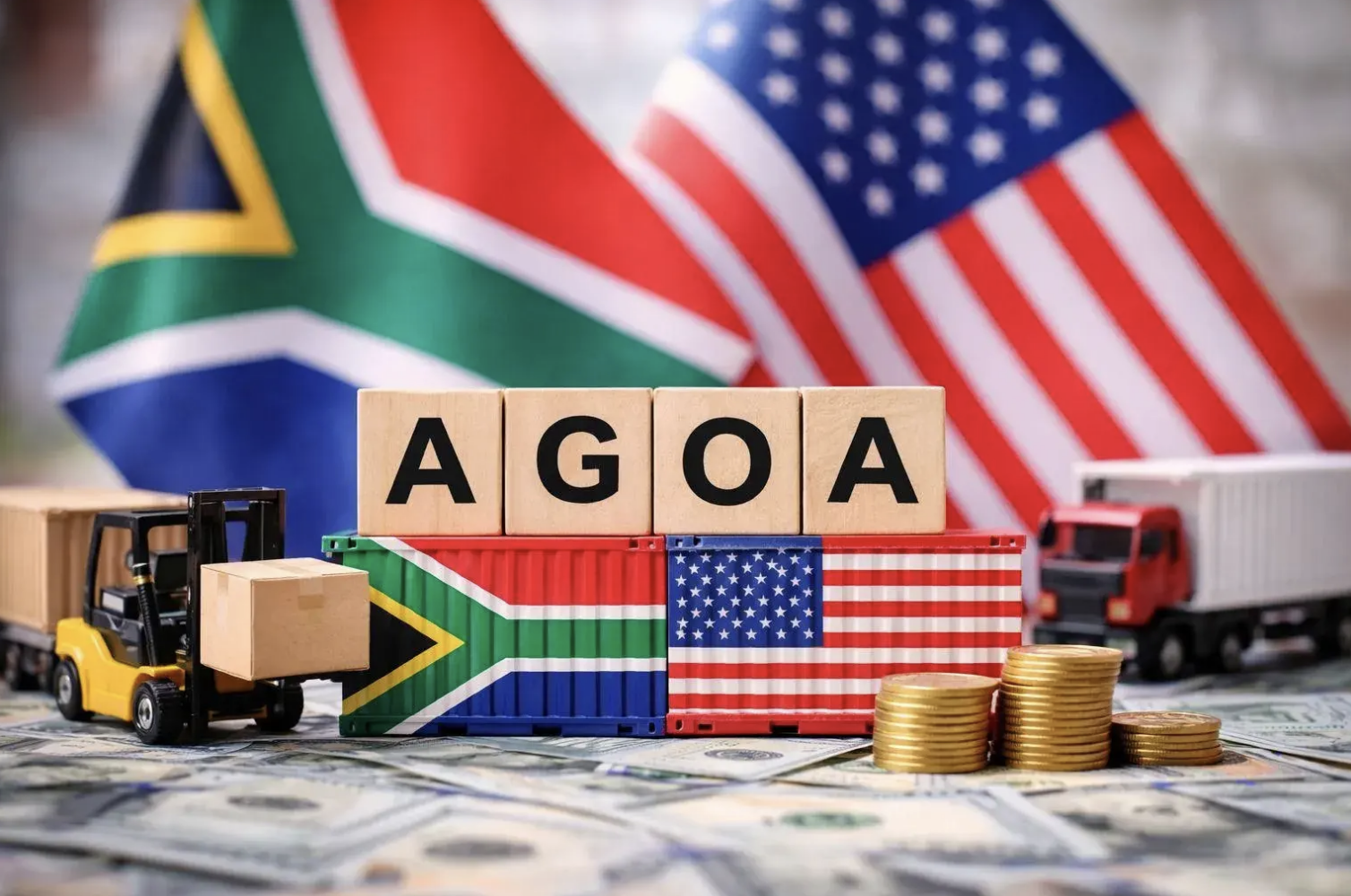
The uncertainty surrounding the African Growth and Opportunity Act (AGOA) has brought the country’s export competitiveness into sharper focus. The United States’ trade preference programme allows eligible African countries to export certain products to the US duty-free.
South Africa’s possible exclusion has raised concerns among exporters, particularly in industries such as clothing, citrus and chemicals, where margins are narrow and preferential access can make a material difference.
Hattingh argued that the country’s overall exposure to the US market was relatively limited. The US accounts for about 7% of South Africa’s total exports, compared with China’s 11.7%. In 2024, goods benefiting from AGOA amounted to R71.5bn, while precious metals already enter the US duty-free.
“The US is only 7% of exports. The sectors that use AGOA, such as apparel, citrus and some chemicals, live on thin margins. Losing a 3% to 10% preference can wipe out that margin,” he said.
Wandile Sihlobo, presidential envoy on agriculture and land and chief economist of the Agricultural Business Chamber of South Africa (Agbiz), said exclusion would not amount to a ban on exports to the US. Instead, South African goods would face additional tariffs, potentially making them less competitive against products from countries that retain preferential access.
“Simply put, if South Africa were excluded from AGOA, the country would face an additional Most Favoured Nation tariff of around 3.4% on top of the existing tariffs the current US administration added to various countries,” he said.
For products facing a 12.5% tariff, that would raise the rate to 15.9%. The effect would vary across industries and products, depending on existing tariffs, profit margins and the availability of alternative suppliers.
Sihlobo argued that the potential impact should be viewed in historical context. South Africa’s agricultural exports to the US totalled $504 million in 2025, down 3% from the previous year, despite tariffs of about 30%. Exports weakened after a 90-day pause in higher tariffs, falling 11% year on year in the third quarter to $144m and 39% in the fourth quarter to $81m.
There has been a recovery this year. Agricultural exports to the US increased by 56% between the first and second quarters of 2026, reaching $123m. The US accounts for about 4% of South African agricultural exports, including citrus, berries, grapes, wine, fruit juices and nuts.
Sihlobo said that experience showed that higher tariffs can affect individual sectors without necessarily bringing trade to a halt.
“Still, one could argue that while this would be a challenging path, it would not necessarily be as catastrophic as we have faced in the past, when we faced much higher US tariffs and still managed to compete.”
“This is not to understate the impact some industries may feel as the increase in tariffs slightly reduces their competitiveness,” Sihlobo cautioned.
Packirisamy said higher tariffs could force companies to absorb additional costs and either reduce profits or pass them on to customers and risk losing business.
Trade uncertainty also affected investment decisions, Packirisamy said.
“Trade uncertainty, meanwhile, makes companies hesitate to build new factories or expand production, which stalls job creation,” she said.
The debate also exposes a longer-running question about South Africa’s relationship with AGOA. In 2014, the country faced pressure to graduate from the programme because of its upper-middle-income status and move towards a bilateral trade agreement with the US. That option was complicated by South Africa’s membership of the Southern African Customs Union, which limits its ability to negotiate bilateral agreements independently of the region.
Diversification requires more than new destinations
The need to diversify is clear, but finding alternative buyers is only part of the challenge. South Africa must also broaden the range of products it exports and improve its ability to compete on price, quality and reliability.
The risks extend beyond the US. Packirisamy warned that a slowdown in China and the European Union could hit mining and manufacturing simultaneously.
“China buys over half of South Africa’s iron ore. If Chinese construction or steel demand slows down, South African mining earnings take an immediate hit,” she said.
The EU is also a major buyer of manufactured goods, including vehicles and machinery. Weaker demand could therefore affect local factories and automotive supply chains. The concentration of exports in a relatively small number of commodities and products means that even a geographically diverse export market does not necessarily protect the economy from external shocks.
Hattingh similarly distinguished between dependence on individual trading partners and dependence on products. While partner concentration was relatively modest, he said the greater vulnerability lay in the composition of exports and exposure to changes in trade policy.
China’s position illustrates the imbalance. It is South Africa’s largest export market, but the SARB’s figures show that it supplies 35.7% of manufactured imports while accounting for only 5.9% of manufactured exports. This points to an opportunity to expand the range of goods South African manufacturers can sell into the Chinese market, rather than relying predominantly on mineral exports.
Agriculture illustrates the opportunities in alternative markets. South African agricultural exports reached $4.1bn in the second quarter of 2026, 10% higher than a year earlier. Africa accounted for 40% of exports, followed by Asia and the Middle East at 24% and the EU at 21%.
But expanding trade requires more than identifying countries with growing consumption. Sihlobo said exporters needed smoother border clearance and reliable logistics to sell processed food and equipment into African markets. In Asia, access to premium agricultural markets depended on food safety standards, cold-chain storage and distribution networks.
He argued that diversification should complement, not replace, existing trade relationships.
“But export diversification must be framed correctly; it is not a replacement for the US, EU, UK, Africa, and other markets. These remain key, and we must work to retain our access to them,” Sihlobo said.
Packirisamy emphasised the practical requirements of accessing new markets, including infrastructure and the ability to meet the standards expected by buyers.
“Meanwhile, in Asia, growth depends on passing food safety rules, setting up cold-chain storage and building distribution networks for premium agricultural goods.”
Domestic infrastructure remained a major obstacle, Packirisamy said.
“High electricity rates, water shortages and long delays at ports raise the overall cost of getting products to market. Exporters end up paying extra for backup power and water. Slower efficient transport further wipes out SA firms’ competitive edge against foreign rivals.”
Hattingh estimated that logistics costs will reach R1.16 trillion, or 14.6% of GDP, the highest since records began in 2003, compared with 11.2% a decade ago. Electricity tariffs are rising by 8.76% for direct Eskom customers and 9.01% for municipal customers in 2026/27, while crime costs the economy about R700bn a year.
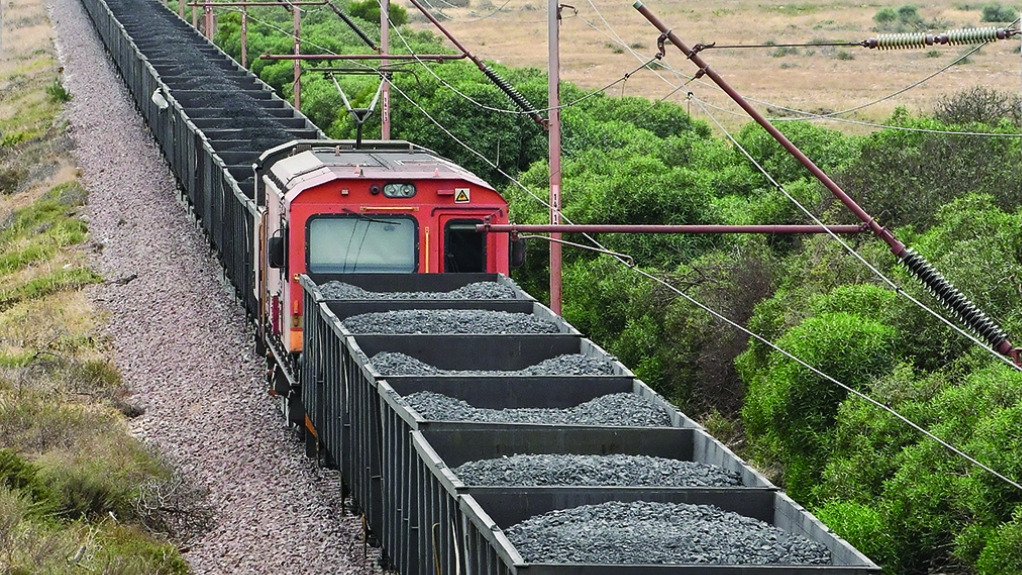
Rail payload increased by 4% in the year to October 2025, suggesting some improvement in the movement of goods. But Hattingh said reforms remained early and fragile. Transport costs alone were expected to add R117bn to the logistics bill in 2026, almost 80% of its increase.
These costs affect more than the mining sector. Manufacturers and agricultural exporters must compete with producers in countries where electricity, transport and water are more reliable and predictable. Even where South African firms can access new markets, the cost of getting goods to those markets can erode the advantage.
The test over the next five years would therefore be whether manufactured and processed goods account for a larger share of exports and whether the top 10 products fall below their current 50.5% share.
Hattingh said cheaper electricity, faster ports and rail, and lower compliance costs were central to improving competitiveness.
For Packirisamy, progress should be measured by “reaching more foreign countries with a wider variety of products”, alongside the export split by country and product and South Africa’s share of global exports.
Source: https://thenational.co.za/