

Despite structural manufacturing decline, opportunities abound – panel
Despite structural manufacturing decline, opportunities abound – panel
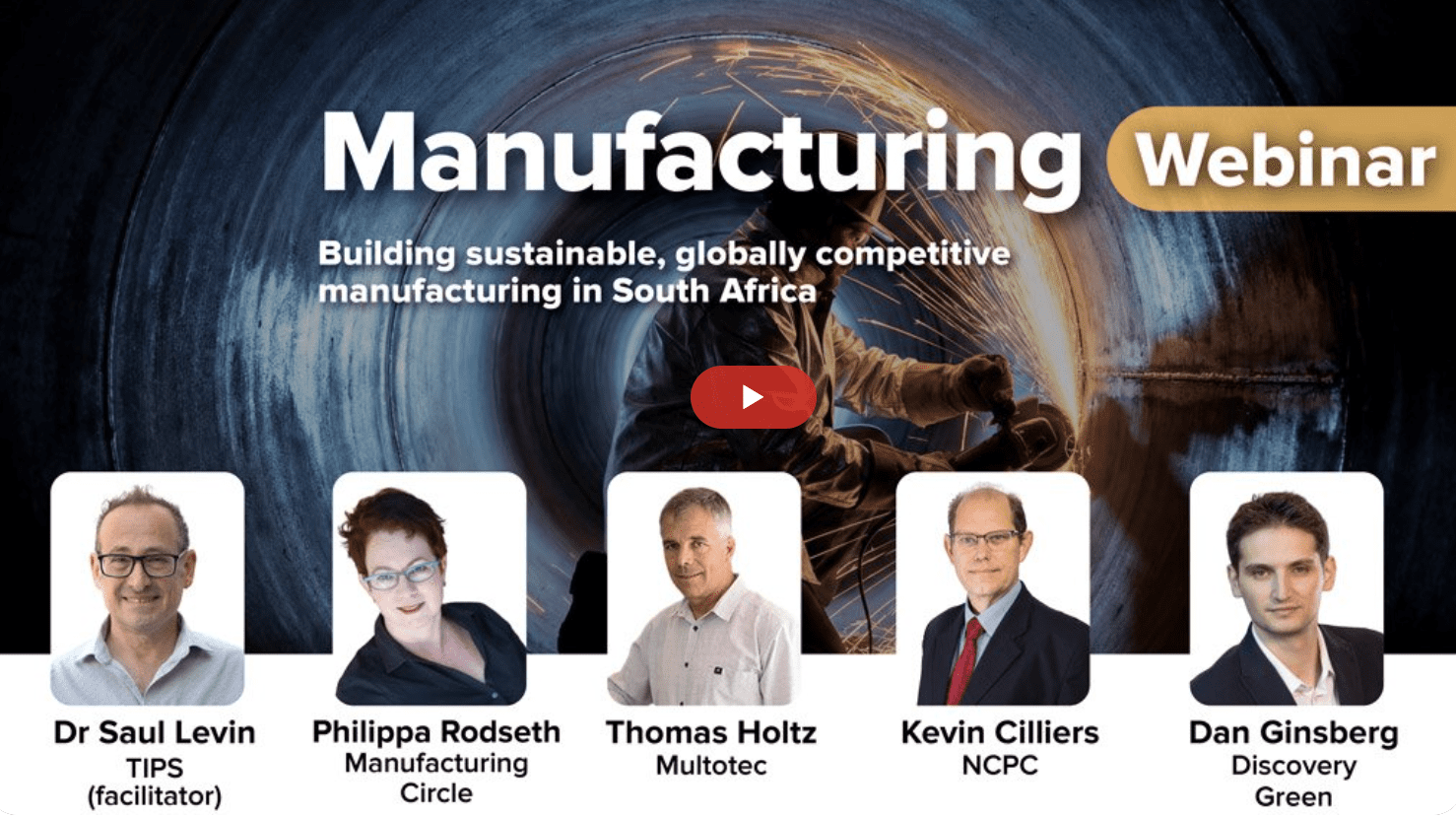
Despite the manufacturing sector’s structural decline over the last 30 years there are various positives that bode well for industrial recovery and growth, a panel of experts agreed during a webinar hosted by Creamer Media on April 22.
The panel discussion sought to identify the actions needed to address the structural disadvantages facing local manufacturers.
Manufacturing Circle executive director Philippa Rodseth, for one, was confident that there were catalytic and shovel-ready projects where “SA Inc” could proactively engage, including in the country’s planned infrastructure build programmes for electricity transmission and distribution infrastructure.
However, this does require more strategic procurement frameworks on government’s part, which will create more local demand for specialised products and services.
In turn, this may require more aligned and consistent policies – rather than new policies.
Rodseth was also optimistic about South Africa already having world-class technical capabilities, human resources and know-how to cater for large-scale infrastructure builds and regional and global demand for various goods.
In turn, Trade and Industry Policy Strategies executive director and panel facilitator Dr Saul Levin was encouraged by the energy reforms liberalising South Africa’s electricity market, which he considered a great boost for manufacturing capacity.
However, he suggested that officiating feed-in tariffs and wheeling in the country could enable households and companies to supplement the grid with more electricity, which would not only improve energy security but encourage more renewable-energy investment and, in turn, increase manufacturing efficiency and companies’ international trade credentials.
Levin listed a significant drag on local manufacturing competitiveness as being the carbon-intensive nature of the economy, which can be mitigated with more renewable-energy installations and decarbonisation efforts.
Discovery Green executive director and actuarial research and development head Dan Ginsberg confirmed that South Africa did, indeed, have the dirtiest electricity of any country in the world owing to a fixation on coal for baseload energy.
There are, however, long-term plans afoot to get this down through adding further renewable-energy capacity and, fortunately, carbon monitoring instruments such as South Africa’s carbon tax and the EU’s Carbon Border Adjustment Mechanism have not yet advanced to become exponentially punitive – but will.
For Ginsberg renewable energy presents multiple opportunities for companies to improve environmental credentials, improve production efficiency, secure electricity supply for decades, lower input and sustaining costs, as well as derive an overall high return on investment.
National Cleaner Production Centre South Africa (NCPC-SA) technical, quality and standards manager Kevin Cilliers agreed that decarbonisation, which was often largely driven by changes in energy use, was an opportunity to remain competitive. “It can be sold as a competitive edge to stay in the game.”
He added that the regulatory landscape and stakeholder expectations had changed markedly from just a few years ago, which necessitated leaner, cleaner and greener solutions across all types of organisations and companies.
MANUFACTURER VIEW
From a manufacturer’s perspective, Multotec group CEO Thomas Holtz suggested that what new investors in the South African manufacturing sector needed was an agile approach to sourcing, a hybrid model of production that allowed for third-party involvement, an industrial ecosystem, patient capital and a can-do mindset that believed African-made products and services could be world-class.
He explained, for example, that “China is not our enemy”, referring to the manufacturing giant of the world as being a partner rather than a competitor.
“For bulk products, source from China, but for customised products and equipment, we can happily compete.
“Be flexible in your production to source some products or processes from third parties – do not aim to do everything yourself. You have to have an industrial ecosystem that includes suppliers, subcontractors and universities, among others.”
Holtz emphasised that new companies in the sector were often too focused on exports without championing the local market first. Global competition and standards were, in fact, much higher than you would find in South Africa, he added.
However, he acknowledged that manufacturers often had to look abroad for demand and markets owing to stagnation in South Africa’s markets.
Rodseth agreed with Holtz that manufacturers could take certain aspects into their own hands to ensure success despite a plethora of local challenges. “A lot of lessons can be learned from those that have become competitive globally in this environment.”
She also agreed with Holtz’s point on not trying to produce what a country like China had perfected on a megascale, adding that there were currently over-production and oversupply issues in the world, with countries often looking for smaller markets to sell products to.
This makes the competitive landscape even more challenging for South African manufacturers, unless niche, and specialised products and services, are pursued that do not experience oversupply, and manufacturers remain agile enough to change production strategies and respond to market demands.
“Manufacturers have a lot of complexity to solve for to retain or sustain the manufacturing industry in South Africa. But it is not necessarily always rocket science. If we apply a practical perspective, remain agile and continue to solve problems proactively, while having a can-do attitude, we can go far down the line,” Rodseth concluded.