

Fabrication Sector’s sustainability depends on modernisation
Fabrication Sector’s sustainability depends on modernisation
While technically resilient, the South African metal fabrication sector is structurally constrained, with its future contingent on its embracing modernisation, sustainability and skills development.
The sector remains a cornerstone of the industrial economy, contributing an estimated 20% to 25% of total manufacturing output and about 4% to 5% of national GDP, says statutory body Engineering Council of South Africa Investigation Committee chairperson and professional society South African Institution of Chemical Engineers (SAIChE) council member Dr Natisha Gareeb.
Despite its significance, recent data indicates an estimated contraction of about 1% to 2% in 2025, driven by inefficiencies across infrastructure, energy systems and logistics networks, she explains.
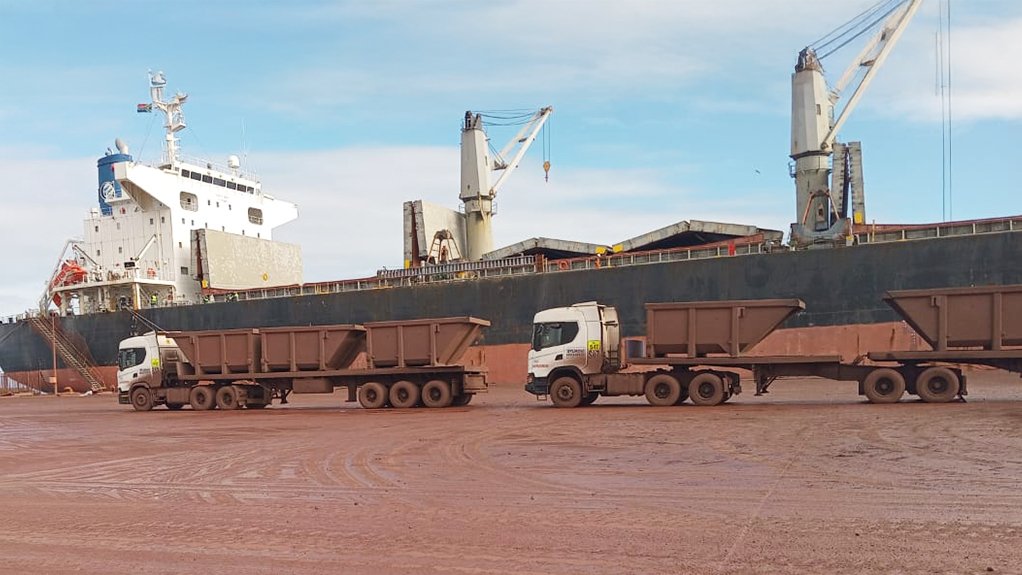
The sector is characterised by high energy intensity, process variability and rising input costs. The local sector is contending with escalating electricity tariffs, deteriorating municipal services and logistical constraints that impact on the effective movement of bulk raw materials and finished goods.
Globally, the EU Carbon Border Adjustment Mechanism places increasing pressure on the sector to decarbonise historically carbon-intensive processes, threatening export competitiveness, particularly as the EU remains one of South Africa’s largest steel export markets.
Meanwhile, the African Continental Free Trade Area (AfCFTA) presents a significant regional opportunity, following phased implementation and tariff reductions across participating countries.
Gareeb explains that South Africa is strategically positioned to supply fabricated metal products for infrastructure and mining developments across the continent. However, leveraging this opportunity requires improved productivity, cost competitiveness and sustainability alignment.
The Steel and Metal Fabrication Master Plan provides a coordinated framework aimed at stabilising and revitalising the sector, but its success depends on effective implementation.
“The sector is not in decline— it is in transition,” Gareeb notes, elaborating that, with targeted investment in modernisation, decarbonisation and advanced engineering solutions, the sector holds substantial unrealised potential to drive industrial recovery and economic growth.
Challenges
Manufacturers are operating in an increasingly complex and demanding environment, shaped by skills shortages, infrastructure instability and uneven technology adoption.
One of the most critical constraints is the shortage of skilled labour across specialised fabrication, welding and digital manufacturing, limiting the sector’s ability to adopt advanced technologies and maintain quality standards.
This skills gap is compounded by a persistent disconnect between academic qualifications and industry-ready competencies.
Gareeb notes that SAIChE directly addresses these gaps through continuing professional development programmes, targeted workshops, mentorship schemes and structured competency frameworks to improve productivity, safety and innovation across the sector.
Meanwhile, supply chain volatility and logistics inefficiencies create further uncertainty for production planning and cost structures, impacting on throughput and delivery performance.
To navigate these challenges, she asserts that engineering professionals must implement robust production planning systems, supply chain optimisation models and resilience strategies that improve reliability and reduce operational risk.
Amid these challenges, technology adoption remains uneven. While advanced capabilities, such as automation, Industry 4.0 systems, additive manufacturing and precision fabrication tools, are reshaping global competitiveness, local uptake is inconsistent.
As a result, a dual-speed sector has emerged, where technologically advanced firms outperform those firms constrained by legacy systems, cost pressures and limited capital investment.
To address this challenge, Gareeb suggests strategic technology integration, as opposed to isolated implementation, adding that engineers are central to designing digitally enabled production systems that leverage data analytics, real-time monitoring and predictive maintenance to improve efficiency and product quality and reduce downtime.
Companies that are actively modernising through AI-driven enterprise resource planning systems, advanced robotics and cloud-based supply chain platforms are achieving gains in process precision, cycle time, waste reduction, predictive maintenance and globally competitive value chains integration, she elaborates.
Additionally, advances in high-strength steels and corrosion-resistant alloys are enabling manufacturers to move towards higher-value, performance-driven applications such as renewable energy and infrastructure.
Gareeb emphasises that the sector’s challenges are significant, but not insurmountable, as they are, fundamentally, engineering challenges. Therefore, the sector’s competitiveness will depend on engineering professionals leading the transition towards digitally enabled, resource-efficient manufacturing.
Into the Future
To unlock growth, the sector must pivot away from commoditised production towards high-value, specialised fabrication by leveraging digitalisation, green industrialisation and stronger regional trade links through mechanisms such as the AfCFTA Agreement.
Gareeb explains that several strategic shifts are essential, including investment in automation and smart manufacturing, alongside reliable, affordable energy and robust logistics infrastructure. Alignment between vocational training, academic curricula and industry needs, in parallel with coherent industrial policy, as well as trade protections to level the playing field, are also required.
With coordinated action across technology, skills, policy and infrastructure, South Africa has the opportunity to become a competitive fabrication hub for the continent, she concludes.